Simple Himalayan Inspired Techniques for Balance and Awareness
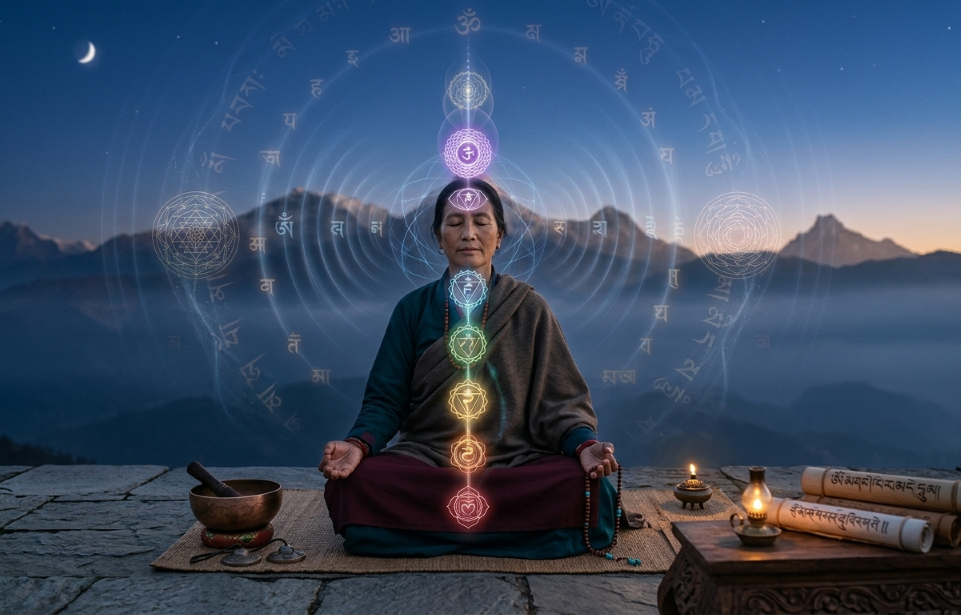
In many ancient yogic and tantric traditions, the chakras are described as subtle energy centers that influence both the body and the mind. Texts such as the Sat-Chakra-Nirupana describe these centers along the spine and associate them with sound, breath, and meditation practices.
The idea is not that the chakras need to be “fixed” every day. Instead, the practices are meant to gently bring attention, breath, and awareness into different parts of the body. Over time this helps calm the nervous system and improve emotional balance.
The techniques below are simple and practical. They are inspired by traditional yogic and Buddhist contemplative practices and can easily be done at home.
Root Chakra Practice
Location: Base of the spine
Theme: Stability and grounding
The root center relates to safety, physical presence, and feeling connected to the earth.
A simple practice is grounding meditation.
Sit comfortably with your feet on the floor or cross legged on a cushion. Bring your attention to the base of your spine.
Take slow steady breaths and imagine your body becoming heavy and stable like a mountain.
You can softly chant the sound LAM a few times.
Another helpful practice is mindful walking. Walk slowly and feel the sensation of your feet touching the ground.
Practice time
5 to 10 minutes
Sacral Chakra Practice
Location: Lower abdomen
Theme: Emotional flow and creativity
This center is associated with emotions and movement.
Gentle physical movement works very well here.
Try slow hip rotations, light stretching, or relaxed yoga movements. Allow your breath to move naturally while you bring attention to the lower belly.
You can also chant the sound VAM softly.
If you prefer still meditation, simply place your hands over your lower abdomen and breathe slowly into that space.
Practice time
5 to 10 minutes
Solar Plexus Chakra Practice
Location: Upper abdomen
Theme: Confidence and inner strength
This center is often associated with personal energy and determination.
A simple breathing technique works well here.
Sit upright and inhale slowly through the nose. Allow the stomach to expand gently. Exhale slowly and relax the abdomen.
Imagine warm golden light spreading through your stomach area.
You can repeat the sound RAM slowly during exhalation.
Another practical technique is practicing small acts of discipline during the day such as completing a task you have been avoiding. Ancient teachings often linked inner strength with daily action.
Practice time
5 minutes
Heart Chakra Practice
Location: Center of the chest
Theme: Compassion and emotional balance
In both yogic and Buddhist traditions, the heart center is associated with kindness and connection.
One of the most powerful practices here is compassion meditation.
Sit comfortably and focus on the center of your chest.
Take a few breaths and quietly repeat phrases such as
May I be peaceful
May I be safe
May I be healthy
After a few minutes extend these wishes toward others.
You may also chant the sound YAM gently while focusing on the heart.
Practice time
10 minutes
Throat Chakra Practice
Location: Throat
Theme: Expression and clarity
This chakra is traditionally connected to sound and communication.
Chanting works especially well here.
Take a comfortable seated position and slowly chant the sound HAM.
Allow the vibration to resonate in the throat and chest.
Another helpful exercise is mindful speaking. During the day try to pause before speaking and notice the intention behind your words.
Ancient traditions often taught that clear speech reflects a clear mind.
Practice time
5 minutes
Third Eye Chakra Practice
Location: Between the eyebrows
Theme: Insight and awareness
This center is related to observation and intuition.
A simple mindfulness meditation works well here.
Sit quietly and bring gentle attention to the space between the eyebrows.
Do not force concentration. Simply observe the breath and allow thoughts to come and go.
If you like working with sound, chant OM softly and let the vibration settle in the head.
Many practitioners notice that this practice naturally quiets mental noise.
Practice time
10 minutes
Crown Chakra Practice
Location: Top of the head
Theme: Stillness and expanded awareness
The crown center is associated with pure awareness in many spiritual traditions.
The most direct practice is silent meditation.
Sit comfortably and allow the body to relax. Let the breath flow naturally without controlling it.
Instead of focusing on a specific point, simply observe the experience of awareness itself.
No mantra is required here, although some traditions still use OM gently.
This practice can feel very simple but it often brings a deep sense of calm.
Practice time
5 to 10 minutes
A Simple Daily Chakra Routine
If you want to combine these practices into a short daily routine, you can move slowly through the body from the base of the spine to the top of the head.
Spend a minute or two with each chakra using breath, awareness, or sound.
The full routine can take around twenty minutes and can easily fit into a morning or evening meditation practice.
A Gentle Reminder
These techniques are inspired by ancient yogic and Buddhist teachings preserved in texts like the Sat-Chakra-Nirupana and later tantric traditions.
They are meant as introductory practices for personal exploration.
For deeper training in chakra meditation, mantra science, and subtle body practices, it is always beneficial to learn from a knowledgeable teacher or guru who has studied these traditions in depth.
Direct guidance can help clarify pronunciation, visualization, and the deeper philosophy behind these practices.
Final Thought
The chakra system is often described as an inner map of awareness.
Each center invites attention to a different aspect of life. Stability, creativity, strength, compassion, expression, insight, and stillness.
The practices themselves are simple.
A quiet breath.
A gentle sound.
A moment of awareness.
Over time these small moments begin to reshape how the mind and body experience the world.
Leave a Reply